
Factory-built homes are no longer just a niche idea or a temporary housing option. Across NSW and Australia, they are becoming part of a much bigger conversation about how homes can be delivered faster, more consistently, and with less pressure on stretched construction resources.
For property owners, investors, first-home buyers and new homeowners, this is worth understanding early.
Not because every home will suddenly be built in a factory. That is not the point. The real shift is that NSW is starting to look seriously at different ways of building permanent housing, especially as traditional construction continues to face delays, cost pressure, labour shortages and approval complexity.
As of 2025, factory-built and modular housing is becoming part of the practical housing supply conversation — not just an industry experiment.
What does “factory-built home” actually mean?
A factory-built home is not necessarily a tiny home, caravan, container home or short-term structure.
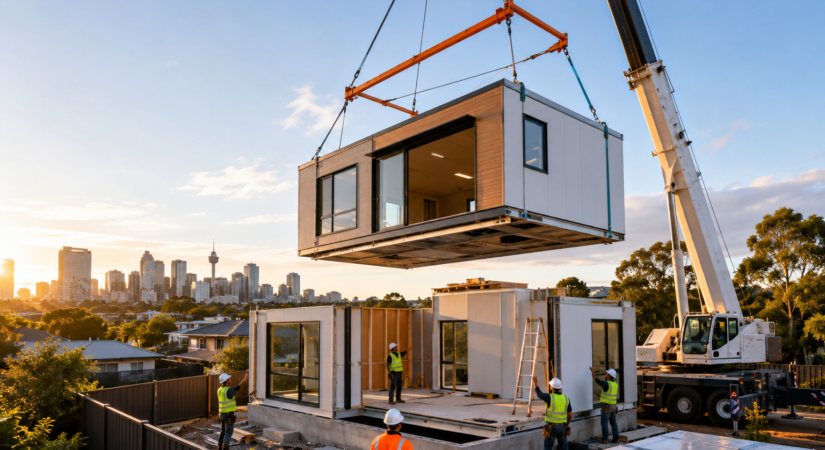
In the NSW housing context, it generally refers to homes or building components that are manufactured off-site in a controlled factory environment, then transported and installed or assembled on-site.
This can include:
- Prefabricated wall, floor or roof systems
- Modular rooms or sections of a dwelling
- Kit-of-parts construction
- Off-site manufactured components
- Volumetric modular homes, where larger sections are built before arriving on-site
The important point is that these homes are intended to be permanent, liveable and compliant dwellings. They still need to meet building standards, planning requirements and quality expectations.
Why NSW is paying attention now
NSW has a housing supply challenge, and traditional construction alone is struggling to keep pace.
The National Housing Supply and Affordability Council’s 2025 reporting showed that NSW is forecast to deliver significantly fewer homes than its population-based share of the national housing target over the 2024–25 to 2028–29 period.
At the same time, the Productivity Commission has highlighted a long-term construction productivity problem in Australia. Housing construction has become slower and more complex, with productivity moving in the wrong direction over decades.
That matters because housing supply is not only about approving more homes. It is also about actually finishing them.
A development approval does not house anyone until the project is built, certified and ready to occupy.
This is where factory-built housing becomes relevant. It offers one possible way to reduce some of the friction that slows down delivery, especially when parts of the build can happen off-site while site preparation and approvals are being managed.
The possible benefits for NSW housing
Factory-built housing is not a magic fix, but it does offer several practical advantages when done properly.
The main potential benefits include:
- Faster construction timelines
- More controlled building conditions
- Less exposure to weather delays
- Reduced material waste
- More repeatable quality control
- Greater certainty for some project types
- Better use of limited skilled labour
In a factory setting, construction can be more standardised. That can make quality easier to monitor and reduce some of the day-to-day unpredictability of a traditional building site.
For NSW, this could be especially useful for repeatable housing types such as duplexes, townhouses, medium-density housing and social or affordable housing projects.
Why owners should care, even if they are not building
This shift is not only relevant to developers or builders.
Property owners, investors and buyers should pay attention because construction methods influence the wider property market over time.
Factory-built homes may affect:
- How quickly new housing supply enters certain areas
- The type of housing built near transport and growth corridors
- Buyer expectations around build quality and energy performance
- Future renovation and extension options
- The way new homes are valued and compared
- How defects, warranties and maintenance are documented
For investors, it is also worth watching because newer forms of housing can change the mix of available stock in a suburb. That does not mean every factory-built home will outperform or underperform a traditional build. It simply means owners should understand what they are looking at before making assumptions.
The biggest misconception: “factory-built” means low quality
One of the main barriers to modular and prefabricated housing is perception.
Some people hear “factory-built” and imagine something temporary, basic or less durable. That is not necessarily accurate.
The quality of any home depends on design, materials, builder capability, installation, certification and ongoing maintenance. A traditionally built home can be poorly delivered. A factory-built home can be well delivered. The method alone does not determine the outcome.
The smarter question is not, “Was it built in a factory?”
The smarter questions are:
- Who designed it?
- Who manufactured it?
- Who installed it?
- What standards does it meet?
- What warranties apply?
- How was quality checked?
- What happens if defects appear later?
That is the level of thinking buyers and owners should bring to this space.
What buyers should ask before purchasing a factory-built or modular home
If you are considering a home that uses prefabricated or modular construction, keep the questions practical.
Before committing, ask:
- Which parts of the home were built off-site?
- Which parts were completed on-site?
- Who is responsible for the full build once all components are assembled?
- What warranties apply to the structure, installation and finishes?
- Are there any special maintenance requirements?
- How were transport and installation risks managed?
- Has the home received the required approvals and certifications?
- Are there records of inspections and quality checks?
- Is the home treated the same way for insurance and finance purposes?
These questions are not designed to make the process feel complicated. They are designed to help buyers understand what they are purchasing.
A well-delivered modular or prefabricated home should be able to answer these questions clearly.
What property investors should watch
For investors, the key issue is not whether factory-built homes are “good” or “bad.” It is whether the property is durable, liveable, well-located and easy to understand from a long-term ownership perspective.
Investors should look at:
- Build quality
- Natural light and ventilation
- Storage
- Noise control
- Energy efficiency
- Maintenance access
- Insurance considerations
- Body corporate or strata arrangements, if applicable
- Future resale perception
- Local demand for that housing type
A factory-built home in the right location, with good design and strong documentation, may be a very different proposition from a rushed or poorly specified build.
The ownership fundamentals still matter.
Location, quality, layout, compliance and long-term demand do not disappear just because the building method changes.
What new homeowners should understand
For new homeowners, the rise of factory-built homes may change expectations around how future homes are delivered.
It may become more normal to see parts of a home manufactured elsewhere, delivered to site and assembled quickly. That could be a positive shift, especially if it improves certainty and reduces delays.
However, homeowners should still be careful with assumptions.
Factory-built does not automatically mean cheaper. It also does not automatically mean faster in every case. The final outcome still depends on land conditions, approvals, access, design, services, builder capacity and installation.
For example, a site with difficult access, complex drainage, slope issues or local planning constraints may still face delays, regardless of the construction method.
The building method helps, but it does not remove the need for good planning.
The practical risks to keep in mind
Factory-built housing has strong potential, but it also comes with practical issues that owners should understand.
Key risks include:
- Transport and crane access limitations
- Site preparation delays
- Confusion over responsibility between manufacturer, builder and installer
- Finance processes that may not always fit non-traditional build stages
- Insurance questions during transport and installation
- Limited buyer understanding at resale
- Quality issues if installation is poorly managed
The most important risk is unclear accountability.
When a home involves off-site manufacturing and on-site installation, owners need to know exactly who is responsible at each stage. Contracts, warranties and records matter.
This is why documentation is especially important.
Why this matters for Greater Sydney
Greater Sydney is under pressure to deliver more homes in well-located areas, particularly near transport, jobs and existing infrastructure.
Factory-built housing may become part of that response because it can support more repeatable, medium-density housing models. That could include duplexes, terraces, townhouses and apartment components in suitable locations.
For property owners, this does not mean every street will suddenly change. But it does mean the way homes are supplied may gradually become more varied.
Owners should be aware of this shift, especially if they are thinking about:
- Buying a new build
- Investing in a growth area
- Holding property long-term
- Renovating or rebuilding
- Assessing future local supply
- Comparing older homes with newer housing stock
The earlier owners understand these changes, the better prepared they are to make calm, informed decisions.
A simple way to think about factory-built homes
Instead of asking whether factory-built housing is better or worse than traditional construction, use a more balanced framework.
Ask whether the home is:
- Well designed
- Properly approved
- Clearly documented
- Built by accountable parties
- Suitable for the site
- Easy to insure and maintain
- Likely to hold buyer confidence over time
- Supported by strong warranties and records
That is the practical lens owners need.
The future of housing will not be one-size-fits-all. NSW will still need traditional homes, apartments, renovations, infill development and new land supply. But factory-built housing is becoming part of the mix.
Conclusion
Factory-built homes are not a passing trend. They are part of a broader shift in how NSW is trying to respond to housing pressure, construction delays and the need for more efficient delivery.
For buyers, homeowners and investors, the opportunity is not to jump on the trend blindly. It is to understand it early, ask better questions and look beyond outdated assumptions.
A factory-built home should still be judged by the same fundamentals as any other property: location, quality, compliance, liveability, maintenance, documentation and long-term demand.
As this part of the market grows, informed owners will be better placed to recognise both the opportunities and the risks.
If you are planning to buy, sell, lease or invest in Greater Sydney and want practical guidance on how property decisions may affect long-term ownership, speak with the RnJ Realty team. Our local experience can help you make a clearer, more confident next move.