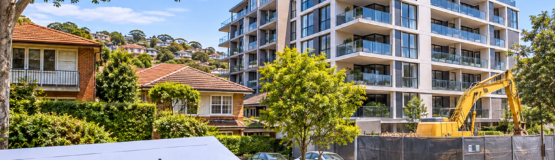

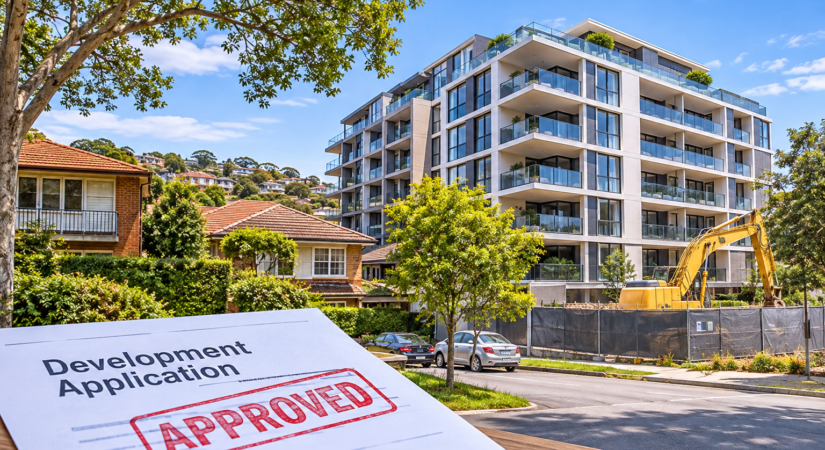
A controversial apartment development in Mosman has received NSW Government approval despite significant community opposition. The decision highlights an increasingly important question for Sydney homeowners: how much influence do residents have over what gets built around them?
What Happened in Mosman?
Seven existing homes along Rangers Avenue in Mosman are set to be demolished following approval of an approximately $85 million residential development.
On 26 October 2026, the NSW Department of Planning, Housing and Infrastructure approved a proposal by Grand Noble Project 1 Pty Ltd to construct a new apartment building at 11–23 Rangers Avenue.
The project includes:
– 44 residential apartments.
– A building reaching approximately six to seven storeys.
– 91 parking spaces across three basement levels.
– 10 affordable housing apartments to be managed by Bridge Housing for 15 years.
– Demolition of seven existing houses.
The development received 174 public submissions, including 170 objections.
Mosman Council also opposed the proposal.
Despite this opposition, the NSW Government granted development consent.
The decision has attracted attention because it illustrates the difficult balance between delivering additional housing and responding to concerns from existing communities.
Why Were Residents Opposed?
The objections were not simply about preventing new housing.
According to reporting on the planning assessment, residents raised several concerns about how the development could affect the surrounding area.
1. Traffic and Parking
A major concern involved additional traffic, parking demand and waste collection.
Even where a development includes private parking, residents may worry about increased vehicle movements and pressure on surrounding streets.
2. Building Height and Scale
The proposed building is considerably larger than the existing houses.
Residents questioned whether its height and overall size would fit the surrounding residential environment.
3. Loss of Views
Some nearby properties were expected to experience significant changes to their existing views.
The planning assessment acknowledged these impacts but ultimately considered them acceptable within the broader assessment of the development.
4. Changes to Local Character
Replacing seven established houses with a substantial apartment building represents a noticeable change to the streetscape.
For existing homeowners, such changes can raise concerns about privacy, outlook and the character of their neighbourhood.
These concerns are particularly relevant in established Sydney suburbs where redevelopment is becoming more common.
Why Was the Development Approved?
A development approval is not decided by counting how many people support or oppose a proposal.
Instead, the relevant planning authority assesses the application against planning controls, environmental impacts, public submissions and other applicable considerations.
In this case, the NSW Department of Planning, Housing and Infrastructure assessed the proposal and determined that consent could be granted.
The development also includes an affordable housing component, contributing additional housing to an established area.
Importantly, this does not mean the objections were ignored.
Public submissions form part of the assessment process, but they do not automatically determine the final outcome.
A project can receive substantial opposition and still be approved if the consent authority concludes that approval is justified under the relevant planning framework.
Does Community Opposition Actually Matter?
Yes. However, the nature of an objection can matter more than the total number submitted.
Residents can raise issues such as:
– Traffic congestion and road safety.
– Overshadowing and privacy.
– Building height and neighbourhood character.
– Environmental impacts.
– Parking and access arrangements.
These concerns can influence the assessment, lead to changes in a proposal or contribute to conditions attached to an approval.
However, an objection does not guarantee that a development will be rejected.
The Mosman decision demonstrates the difference between having an opportunity to participate in planning and having the power to determine the outcome.
What Does This Mean for Sydney Homeowners?
The case offers several practical lessons for people who own property in established Sydney neighbourhoods.
Your Surroundings May Change
Buying a home with a particular outlook, level of privacy or surrounding building character does not guarantee those conditions will remain unchanged.
Future development may alter the immediate environment.
This is worth considering when purchasing a property, particularly where nearby land could be redeveloped.
Planning Information Is Worth Checking
Before purchasing a property, buyers can investigate nearby development applications and relevant planning controls.
NSW’s Planning Portal and local council websites provide information about many proposed developments.
Checking these resources can help buyers understand potential changes beyond the property boundary.
Public Consultation Is an Opportunity, Not a Veto
Homeowners who are concerned about a proposed development should participate in the formal consultation process.
Submissions that clearly explain specific planning impacts are generally more useful than broad statements of opposition.
Residents should also pay attention to submission deadlines and supporting documents.
The Bigger Picture: Sydney’s Housing Challenge
Sydney faces an ongoing challenge: accommodating more residents while maintaining the quality of established communities.
Increasing housing supply can create opportunities for buyers and contribute to broader housing needs.
However, higher-density development can also create concerns about infrastructure, neighbourhood character and the experience of existing residents.
Both considerations matter.
The Mosman approval illustrates how difficult these competing priorities can become when a development affects an established residential area.
The broader issue is not simply whether Sydney needs more housing.
It is how new housing can be delivered while managing the impacts on surrounding communities.
Final Thoughts
The approval of the $85 million Mosman development shows that substantial community opposition does not necessarily prevent a project from proceeding.
For Sydney homeowners, the lesson is straightforward: understanding nearby development activity is an important part of understanding your property.
Whether you are buying, selling or holding a property long-term, it is worth looking beyond the building itself and considering how the surrounding area may evolve.
Property ownership is not only about what you own today. It is also about understanding what could change around it tomorrow.
Stay Informed With RnJ Realty
At RnJ Realty, we believe informed property decisions begin with understanding the wider Sydney property landscape.
Whether you are a homeowner, investor or prospective buyer, our team can help you navigate property decisions with practical local knowledge.
Contact RnJ Realty to discuss your Greater Sydney property needs.
RnJ Realty | Greater Sydney
—
Sources and further reading
– Mosman Collective, 29 October 2026 — State Approves Rangers Ave Super Site in Mosman.
– Domain — Homes Face Wrecking Ball After $85m Mosman Project Greenlit.
– NSW Department of Planning, Housing and Infrastructure — NSW Planning Portal and development assessment information.