

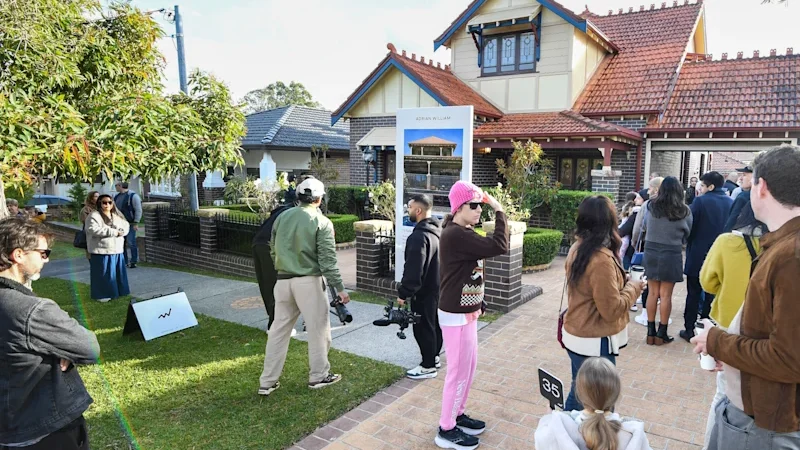
After a strong rebound in 2025, Australia’s property market is expected to slow its pace in 2026. While prices are still forecast to rise overall, economists and major banks agree that momentum is easing, affordability pressures are growing, and interest rate risks remain firmly in play.
In short, 2026 is shaping up to be a year of moderation rather than momentum — particularly in higher-priced markets.
From Boom to Balance
The past year delivered double-digit price growth across much of the country, driven by falling interest rates, tight housing supply and buyer FOMO. Cities such as Perth, Adelaide and Brisbane led the upswing, while Sydney also experienced renewed confidence.
However, economists now expect that pace to cool.
According to Domain research, median house prices are still forecast to reach record highs in 2026 — with houses tipped to rise around 6 per cent and units 5 per cent nationally. But these gains are expected to come with greater volatility and clear market segmentation.
Domain’s Chief of Research and Economics, Dr Nicola Powell, describes the outlook as a “year of two halves,” with early-year growth potentially giving way to softer conditions if interest rates rise.
Interest Rates: The Key Risk for 2026
The biggest headwind facing the market is the risk of interest rate hikes.
Major banks have already revised their forecasts:
-
ANZ: ~5.8% growth across capital cities
-
CBA: ~4%
-
NAB: ~6%
-
Westpac: recently downgraded its outlook
Even a single rate increase could dampen buyer confidence, reduce borrowing capacity and delay purchasing decisions — particularly in premium price brackets.
As AMP’s Chief Economist Dr Shane Oliver notes, if rates rise rather than hold steady, price growth could stall or even turn negative in some markets.
Sydney: Flatlining at the Top End
Sydney is expected to record moderate growth overall, but signs of fatigue are already emerging.
Recent data shows:
-
House values dipped slightly in late 2025
-
Auction clearance rates fell into the high-50% range
-
Select high-end suburbs began recording mild price declines
Properties priced above $2.5 million are expected to face the most pressure in 2026, as affordability constraints, borrowing limits and cautious sentiment weigh on buyers.
Simply put, the top end of the market is cooling faster than the rest.
Affordable Markets Remain the Bright Spot
While premium segments may soften, affordable housing markets are expected to remain resilient.
Government support measures — including the expanded 5% deposit scheme and shared equity programs — are likely to continue supporting:
-
First-home buyers
-
Budget-conscious upgraders
-
Rentvestors and entry-level investors
In Sydney and Melbourne, this demand is strongest in suburbs 20 kilometres or more from the CBD, where price points remain accessible.
Regional markets are also tipped to perform well, particularly in Western Australia and Far North Queensland, supported by investor activity and rental demand.
Investors Are Returning — Cautiously
Another notable trend is the return of investors, including first-home buyers using rentvesting strategies.
NSW lending data shows around 10% of new investor loans are now being taken out by first-home buyers — a trend expected to continue into 2026, especially in affordable regions.
However, investor activity remains sensitive to interest rates and rental yield performance, meaning growth is likely to be selective rather than broad-based.
What This Means for 2026
Overall, 2026 is expected to be:
-
Less volatile than previous boom cycles
-
More sensitive to interest rate movements
-
Clearly split between high-end and affordable markets
While prices may still rise, the market is no longer being lifted by universal tailwinds such as rapid migration growth or aggressive rate cuts.
Instead, success in 2026 will depend on price point, location, affordability and buyer type.
Final Thoughts
The property market isn’t heading for a crash — but it is entering a more measured phase.
For buyers, this could mean less competition and more negotiation power. For sellers, realistic pricing and strong presentation will be critical. And for investors, strategy matters more than ever.
At RNJ Realty, we continue to monitor market shifts closely to help our clients make informed, data-driven decisions in a changing property landscape.