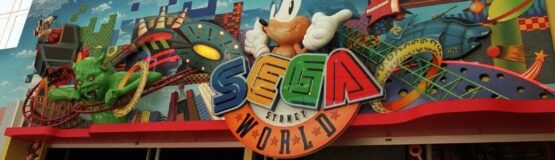

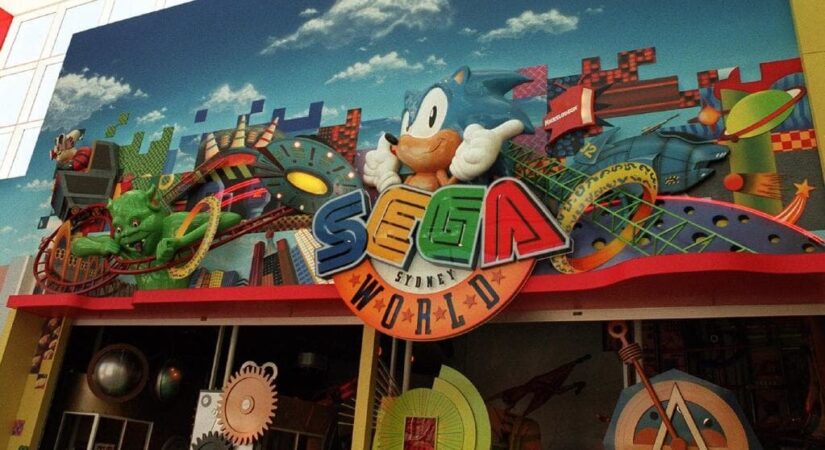
Once dubbed “Australia’s interactive Disneyland,” Sega World Sydney remains one of the country’s most fascinating—and short-lived—entertainment ventures. Operating for less than four years between 1997 and 2000, the ambitious indoor theme park left behind a legacy that still sparks curiosity today.
A Vision Ahead of Its Time
Located in Darling Harbour, Sega World Sydney was the brainchild of entrepreneur Kevin Bermeister. Inspired by Sega’s successful indoor theme parks in Japan and the UK, Bermeister envisioned a high-tech entertainment hub that would redefine leisure in Australia.
Backed by a joint investment of $80 million from Sega and Bermeister’s company Jacfun, the project took three years to complete. Built on a rare 99-year lease, the 10,000sqm venue was designed to anchor Sega’s expansion across the Asia-Pacific region.
Inside “Australia’s Interactive Disneyland”
When Sega World Sydney opened in March 1997, it attracted massive attention, welcoming around 70,000 visitors in its first month alone.
The park featured:
- Nine amusement rides, including the popular Ghost Hunter rollercoaster
- Virtual reality simulators (cutting-edge for its time)
- Over 200 arcade machines
- A food court and live entertainment spaces
Divided into “past, present, and future” themed zones, the park offered a unique mix of physical rides and digital experiences—something rarely seen in Australia at the time.
It quickly became one of Sydney’s trendiest venues, alongside nearby attractions like IMAX Sydney, helping shape the city’s evolving entertainment scene.
More Than Just a Theme Park
Sega World wasn’t just about rides—it was also a popular event space. From corporate functions hosting up to 1,000 guests to monthly under-18 dance parties known as “Crush,” the venue became a cultural hotspot.
These dance events, attracting thousands of teenagers, reflected the growing rave and club culture of the late ‘90s—adding another layer to the park’s identity.
The Rapid Downfall
Despite its promising start, Sega World Sydney began struggling financially within months of opening.
Visitor numbers failed to meet expectations, with the park falling well short of its projected 1.2–1.5 million annual visitors. By 2000, attendance had dropped to just 400,000 for the year.
Several factors contributed to its decline:
- High operating costs
- Lower-than-expected visitor numbers
- Limited appeal outside peak holiday periods
- A market not yet ready for fully immersive digital entertainment
Even the boost expected from the 2000 Summer Olympics failed to revive the park’s fortunes.
In November 2000, Sega World Sydney officially closed its doors.
What Happened Next?
After its closure, the park’s rides and attractions were auctioned off at heavily reduced prices. The building itself remained unused until 2003, when its long-term lease was terminated.
By 2008, the site had been redeveloped, and the iconic blue dome that once defined Sega World Sydney was demolished—marking the end of an era.
A Legacy That Lives On
While Sega World Sydney is often remembered as a business failure, many believe it was simply ahead of its time.
In the late 1990s, digital entertainment was still in its infancy. Without smartphones, widespread internet access, or a strong gaming culture, the concept may have been too advanced for the average Australian consumer.
Today, with gaming and immersive experiences now mainstream, it’s easy to imagine a different outcome.
Could It Have Succeeded Today?
Looking back, Sega World Sydney represents a bold experiment—one where technology, entertainment, and ambition collided.
And perhaps its story isn’t just about failure, but timing.
Because in today’s world of virtual reality, esports, and interactive attractions, a concept like Sega World might not only survive—it could thrive.