

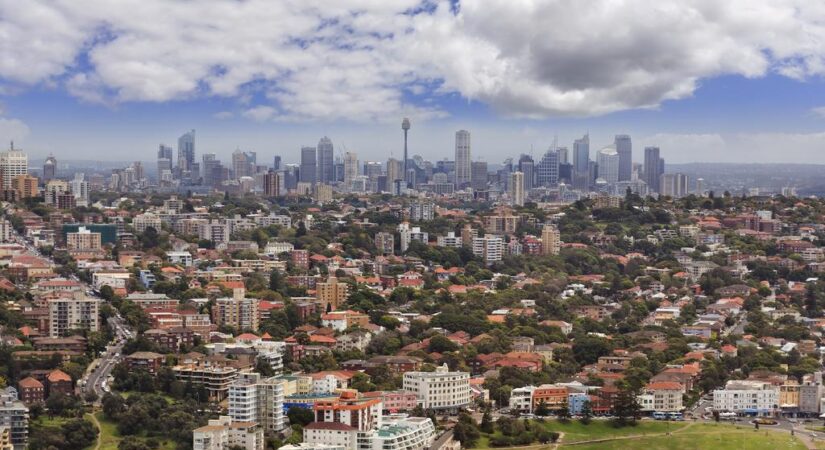
Sydney’s property market is showing signs of a deeper downturn, with the city recording the steepest property price decline in Australia in July. New figures reveal that falling buyer demand, higher interest rates and growing economic uncertainty are putting further pressure on Sydney home prices.
Sydney Prices Fall for the Fifth Consecutive Month
According to the latest PropTrack Home Price Index, Sydney home prices fell for the fifth consecutive month in July, declining by 0.6% over the month across all dwellings. Prices are also 1.6% lower than a year ago, making Sydney the weakest-performing major property market nationally over the period.
The decline was more noticeable for houses, which fell 0.7% during July, while unit prices dropped 0.3%.
Sydney’s current median prices are approximately:
- Houses: $1,563,000
- Units: $871,000
House prices have fallen 2.6% over the past year, meaning a typical Sydney house is now around $20,000 cheaper than it was a year ago. Units, however, have performed differently, recording a 0.7% annual increase.
Why Are Sydney House Prices Falling?
Several factors are contributing to the current downturn.
Higher Interest Rates
Sydney’s expensive housing market is particularly sensitive to changes in borrowing costs. As interest rates rise, buyers generally have less borrowing capacity, reducing the amount they can afford to spend on property.
PropTrack senior economist Anne Flaherty noted that Sydney’s position as Australia’s most expensive housing market makes it particularly vulnerable to higher interest rates.
For buyers already facing large mortgages, even relatively small changes in borrowing capacity can significantly affect purchasing decisions.
Buyers Are Holding Back
Reduced buyer competition is also contributing to weaker prices. Investors are becoming more cautious, while some first-home buyers and existing homeowners looking to upgrade are choosing to wait and see whether prices fall further.
This has created a more cautious market, with fewer buyers competing for properties.
Budget Uncertainty
Federal Budget changes and concerns around potential changes to property investment rules may also be adding to uncertainty.
According to Flaherty, proposed changes involving negative gearing on established properties could make property investment less attractive, particularly in an expensive market such as Sydney.
Units Are Becoming More Attractive
As Sydney’s house prices remain out of reach for many buyers, units are becoming an increasingly important alternative.
The median Sydney house price of more than $1.5 million means that many buyers can no longer comfortably enter the detached housing market.
Instead, buyers are turning towards apartments and units as a more affordable way to remain in the Sydney property market.
This affordability gap helps explain why Sydney houses have experienced a much sharper decline than units over the past year.
What Does This Mean for Sydney Property Owners?
The latest figures highlight a changing market where pricing, affordability and buyer demand are becoming increasingly important.
For sellers, realistic pricing may be essential as buyers become more selective and competition weakens. Properties that are priced too aggressively could remain on the market for longer.
For investors and property owners, the current environment also reinforces the importance of understanding local market conditions rather than relying solely on broader Sydney price trends.
Looking Ahead
Sydney’s property downturn is gaining momentum, but the market is not moving uniformly. Houses are experiencing greater price pressure, while units are proving more resilient due to their relative affordability.
With interest rates, borrowing capacity, investor activity and buyer confidence continuing to influence the market, the coming months will be important for determining whether Sydney’s price declines deepen or begin to stabilise.
For Sydney buyers, sellers and property investors, understanding these changing market conditions can help you make more informed property decisions.