

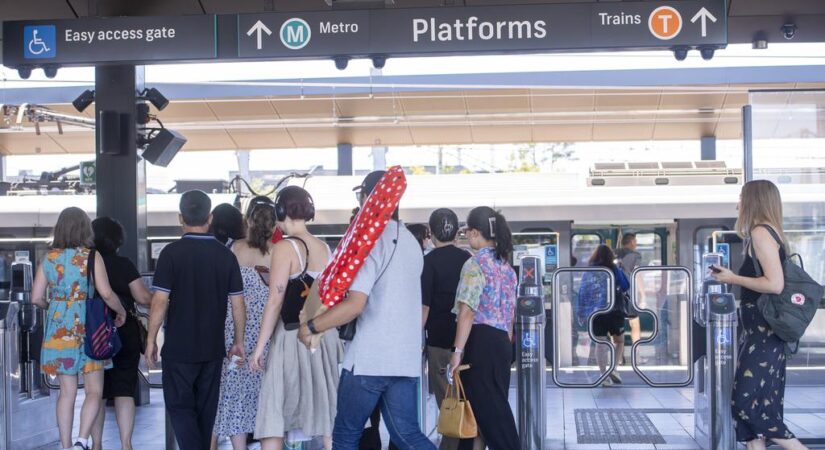
Sydney’s expanding metro network is doing more than improving transport—it’s actively reshaping the city’s property landscape.
With rising petrol prices pushing more commuters toward public transport, the spotlight has shifted firmly onto Sydney’s metro lines. Increased reliance on rail connectivity is now translating into stronger demand—and price growth—in suburbs positioned along these key infrastructure corridors.
Increased Services, Increased Demand
In response to growing commuter numbers, Sydney Metro services have been temporarily boosted, benefiting nearly 1.5 million weekly passengers. The addition of new trains and expanded services along the Tallawong to Sydenham line is improving capacity and accessibility.
As the Southwest Metro extension edges closer to completion, the impact on surrounding property markets is becoming increasingly evident.
Property Growth Along Metro Corridors
New data highlights that the Southwest Metro and the Western Sydney Airport corridor are currently leading Sydney in price growth momentum.
- Southwest corridor: +12.41% growth (past 2 years)
- Western Sydney Airport corridor: +17.50% growth (past 2 years)
These areas are benefiting from strong infrastructure investment, improved connectivity, and future employment hubs—particularly around the upcoming Western Sydney Airport.
Why the Southwest Is Gaining Attention
One of the key drivers behind the Southwest’s appeal is affordability.
Median house prices in the region have risen from approximately $1.03 million in 2019 to $1.87 million today, yet they still remain more accessible compared to Sydney’s premium markets. This creates more room for growth and attracts buyers seeking long-term value.
The combination of:
- Lower entry price points
- Infrastructure upgrades
- Future development pipelines
…is making the Southwest a standout choice for both investors and owner-occupiers.
Lessons from the Northwest Metro
The Northwest Metro, launched in 2019, provides a clear example of how infrastructure can influence property values.
- 2019–2021 growth: +39.94%
- Recent 2-year growth: +8.12%
This trend suggests that property prices often surge in anticipation of infrastructure, then stabilise once the benefits are fully absorbed by the market.
Not All Areas Grow Equally
Interestingly, the City and Inner West line (2024) recorded the slowest recent growth at 4.82%.
This is largely due to:
- Already high property prices
- A higher concentration of apartments rather than houses
Similarly, premium suburbs like Neutral Bay and Kirribilli have seen minimal growth, with median house prices exceeding $3 million. In these areas, buyers are often paying for established prestige rather than future upside.
Emerging High-Growth Suburbs
Several suburbs have stood out for their strong year-on-year performance:
- Ashcroft–Busby–Miller: +13.9%
- Colyton–Oxley Park: +13.62%
- St Marys–North St Marys: +13.53%
These areas share common characteristics:
- Median prices around $1 million
- Strong future development potential
- Proximity to upcoming infrastructure
The Bigger Picture: Buying the Future vs. the Past
A key takeaway from current market trends is the distinction between buying into future growth versus established prestige.
High-growth suburbs tend to offer:
- Affordability
- Infrastructure-driven demand
- Development opportunities
While premium suburbs often reflect:
- Historical value
- Limited growth potential
- Higher entry costs
Final Thoughts
Sydney’s metro expansion is proving to be a major catalyst for property market shifts. As new lines near completion, suburbs along these corridors are emerging as the city’s next growth hotspots.
For buyers and investors, the opportunity lies in identifying areas where infrastructure, affordability, and future development intersect.
With the Southwest Metro and Western Sydney Airport projects leading the way, the next wave of property growth in Sydney is already underway.