

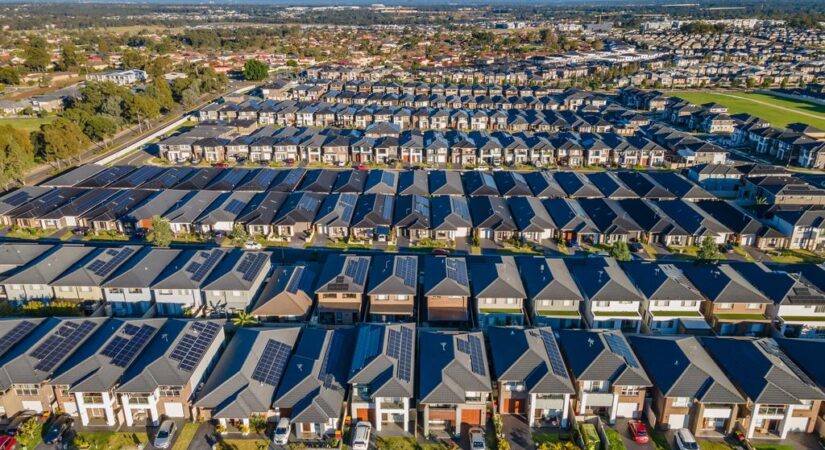
While Sydney’s property market is forecast to remain relatively flat in 2026, a select group of suburbs are tipped to outperform the broader market over the coming months.
According to the latest State of Sydney Report by Shore Financial, five suburbs — spread across different price brackets — are expected to record stronger-than-average growth in asking prices over the next six months.
These suburbs have been identified after analysing more than 600 Sydney suburbs and dividing them into five distinct market segments, or “quintiles”: Heartland, Suburban, Rising, Professional and Affluent Sydney.
Why Sydney Is Expected to Stay Flat in 2026
Shore Financial CEO Theo Chambers said Sydney house prices are likely to “tread water” in 2026.
Several key factors are shaping this outlook:
-
Rising interest rates reducing borrowing capacity
-
Ongoing signals from the Reserve Bank of Australia of potential further rate increases
-
Affordability pressures across multiple market segments
-
A slight increase in property listings, particularly in mid- to upper-tier markets
-
Weakened buyer confidence driven by rate-rise sentiment
Mr Chambers emphasised that psychology plays a major role in property cycles. Even modest rate increases can significantly impact buyer sentiment, making purchasers more cautious and less aggressive in negotiations.
Despite these broader headwinds, certain suburbs are positioned to outperform.
The Five Sydney Suburbs Expected to Outperform in 2026
1. Silverdale (2752) – Heartland Sydney
Located in Sydney’s west near the Blue Mountains, Silverdale, New South Wales tops the “Heartland” category.
-
Median house price: $1.4 million
-
Forecast growth: 3–4% (next six months)
-
Market profile: 99% freestanding houses
Silverdale’s dominance of standalone homes and relative affordability within its segment position it for steady short-term gains.
2. Spencer (2775) – Suburban Sydney
Leading the “Suburban” quintile is Spencer, New South Wales on the Central Coast.
-
Median house price: $1.055 million
-
Forecast growth: 2–3%
-
Owner-occupiers: 95%
-
Average days on market: 22 days
High owner-occupier presence and relatively quick sales turnover highlight stable demand in the area.
3. Barden Ridge (2234) – Rising Sydney
In the Sutherland Shire, Barden Ridge, New South Wales tops the “Rising” segment.
-
Median house price: $1.825 million
-
12-month growth: 10%
-
Forecast growth: 3–4% (next six months)
Following a strong year of price growth, Barden Ridge is expected to maintain its upward momentum despite the broader market slowdown.
4. Bayview (2104) – Professional Sydney
From Sydney’s Northern Beaches, Bayview, New South Wales leads the “Professional” category.
-
Median house price: $3.225 million
-
Forecast growth: 3–4%
-
Average household income: $2,202 per week
-
Average days on market: 35 days
The suburb’s waterside appeal and strong household incomes underpin continued demand in this premium segment.
5. Randwick (2031) – Affluent Sydney
In Sydney’s eastern suburbs, Randwick, New South Wales is forecast to be the top performer among “Affluent” suburbs.
-
Median house price: $3.95 million
-
Forecast growth: 2–3%
-
Freestanding homes: 14% of properties
-
Average household income: $2,829 per week
With limited freestanding housing stock and strong incomes, Randwick remains a tightly held, high-demand location.
What This Means for Buyers and Owners in 2026
Although Sydney’s overall market may see only minimal growth this year, these five suburbs demonstrate that opportunities still exist — particularly for buyers and investors who focus on local fundamentals rather than headline market trends.
Key takeaways for 2026:
-
Not all suburbs move in sync with the broader market
-
Supply composition (freestanding vs. unit stock) matters
-
Owner-occupier dominance often signals stability
-
Buyer sentiment remains a powerful short-term driver
For property owners, 2026 may be less about rapid capital growth and more about strategic positioning. For buyers, selective opportunities could emerge in high-performing micro-markets.
As always, suburb-level analysis is critical in a market where performance varies significantly from postcode to postcode.