

You never think it will happen to you. Until it does.
Until one ordinary afternoon turns into a frantic scramble to protect your family, your home, and your life — and you realise just how unprepared you really are.
The Day Everything Changed
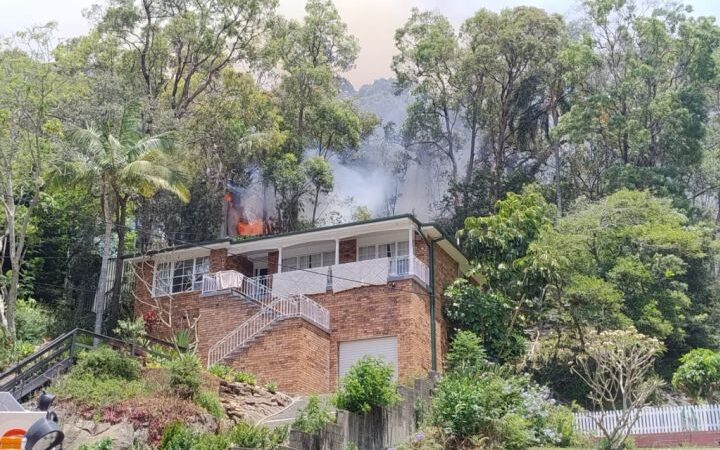
It was Saturday, 6 December, in Koolewong on the NSW Central Coast. A normal afternoon. My husband Jake was hanging washing on our balcony when he suddenly looked up and saw the hill beside our home completely engulfed in flames.
Within minutes, firefighters arrived. We rushed to get our two young children, our dog, important documents, and a box of irreplaceable memories into the car.
Just three houses down, a home had no chance. It went up like a box of matches, frighteningly fast. Then came the sound I’ll never forget — loud explosions as fire tore through nearby properties.
Our first sighting of the fire was around 12:40pm. By 12:57pm, we were told it was our last chance to leave.
Fifteen, maybe twenty minutes — from being completely unaware of danger to fleeing for our lives. And I can tell you, that time disappears fast.
When Escape Feels Impossible
We drove away from our home over lawns to avoid a fallen tree blocking the road. As we passed, we saw fire directly behind our neighbour’s house. In that moment, we were certain our home was gone.
Later, we watched horrifying footage of the blaze jumping the hill and destroying 16 houses on the next street. Then it jumped again — one kilometre across water — threatening homes in Woy Woy Bay. All within hours.
That night, any hope of relief disappeared as fire reignited in the hills on the other side of our house. Several sleepless nights followed as firefighters battled both the main fire front and relentless spot fires.
Finally, on Wednesday night, our street was given the all-clear to return home. On Thursday morning, another small reignition kept the community on edge.
This will be a long bushfire season — especially for those deeply traumatised by what they’ve lost.
Gratitude, Guilt and Reality
We feel overwhelming gratitude toward the firefighters who saved our home, working for days in unbearable 41-degree heat to hold back the flames.
But relief is tempered by deep sadness. Our home survived while others lost everything. If the wind had blown a different way, it could have been us.
And that’s why I’m now telling anyone who will listen:
You need a clear, detailed bushfire plan — one that covers multiple scenarios.
“I Thought I Had a Plan”
I already know the comments this story might attract. Yes, I live in a wooden house backing onto bushland. Of course I should have had a fire plan.
And I can’t really argue with that.
But I also know I’m not alone in believing that a vague plan of “grab the important stuff and get out” was enough.
I subconsciously thought detailed bushfire planning was for remote rural properties — not suburban homes with quick access to fire stations.
I assumed evacuation would be obvious: leave from the side furthest from the flames and drive away.
This experience proved how wrong I was.
When Every Second Counts
We called 000 and got the kids out quickly. But then we argued.
I wanted Jake to take the children to safety immediately while I stayed back with my mum to do what we could. Jake refused to leave without me.
We wasted precious time debating things like where to move the barbecue gas bottle.
When a fire liaison officer initially said it was okay to stay and start wetting down, I realised I didn’t actually know what to do, or what order to do it in, to protect our home.
Even more confronting was learning later that a nearby neighbour didn’t know the fire was there until explosions began in the house next door. After getting my own children out, alerting others should have been my next priority. A WhatsApp message wasn’t enough.
The Emotional Aftermath
I stayed calm until we were told it was our final chance to leave. Once evacuated to my parents’ home, I broke down — pacing, crying, and blaming myself.
I was convinced that if our home burned down, it would be my fault for not being prepared or efficient enough.
I’ve since accepted an important truth: some homes are simply undefendable against an intense fire front.
The NSW Rural Fire Service is clear — even with preparation, it is not safe to stay during extreme fire danger unless your home is specifically designed to withstand bushfires. Our older wooden house almost certainly is not.
What a Bushfire Plan Really Means
There is no plan that makes a home completely fire-safe.
But there are plans that:
- Prepare your home before fire season
- Outline exactly what to do on extreme fire danger days
- Remove uncertainty during an emergency
- Protect lives — especially children
A bushfire plan isn’t about saving property at all costs. It’s about giving your family the best possible chance of survival.
Fires Can Reach Anyone
Living next to bushland increases risk — but fires don’t stop at the bush’s edge.
Some of the homes lost in this disaster were several streets away from bushland. That they were destroyed while ours survived is nothing more than cruel chance.
That’s why this message matters.
Final Thought
If you live in Australia, bushfires are not someone else’s problem.
They can reach anyone. Anywhere.
And being prepared — truly prepared — could one day save your life